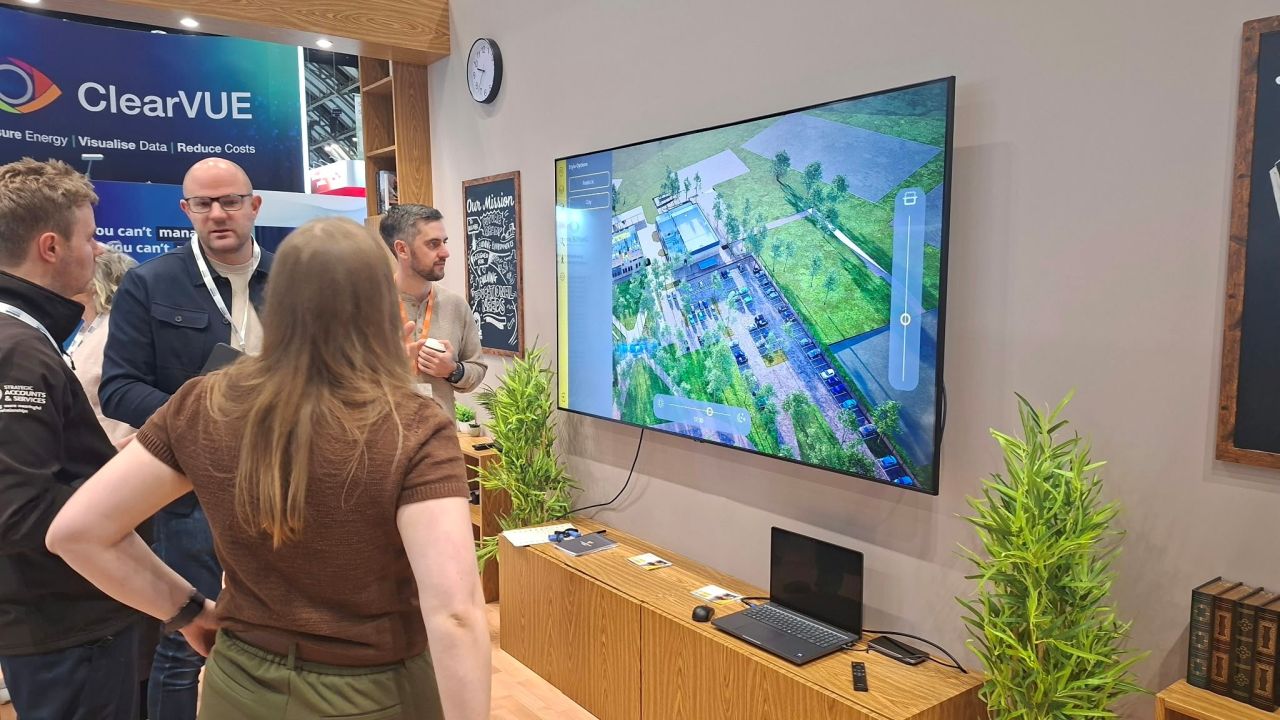
The most useful hour I spent at Education Estates this year was in a session about a building most delegates will never commission: the secure children's home.
I chaired it, and the discussion kept coming back to one point. These are some of the hardest briefs in the public estate. Young people with complex and varied needs; a building that must be safe without feeling like a cell; education, care and wellbeing under one roof. They only work when design starts from the people who will live and learn in them.
That lesson reaches well beyond secure accommodation, because it runs straight into the loudest message from this year's conference.
The sector wants speed, and it is right to
Across two days at Manchester Central, DfE representatives, education providers and industry partners pressed the same case: turn long-term ambition into delivery, and do it faster. Much of the delay sits in pre-construction, where months go before anyone reaches site. Every term lost is a term pupils spend in buildings that no longer suit them.
The DfE's Education Estates Strategy, published in February, gives that urgency a frame: a decade of renewal backed by £38bn.
Yet chasing pace must not come at the expense of good, high quality engagement at the front of a project: the conversations with staff, pupils and families. Reduce this all important period, and you may get a building delivered sooner that runs the risk of failing the people in it.
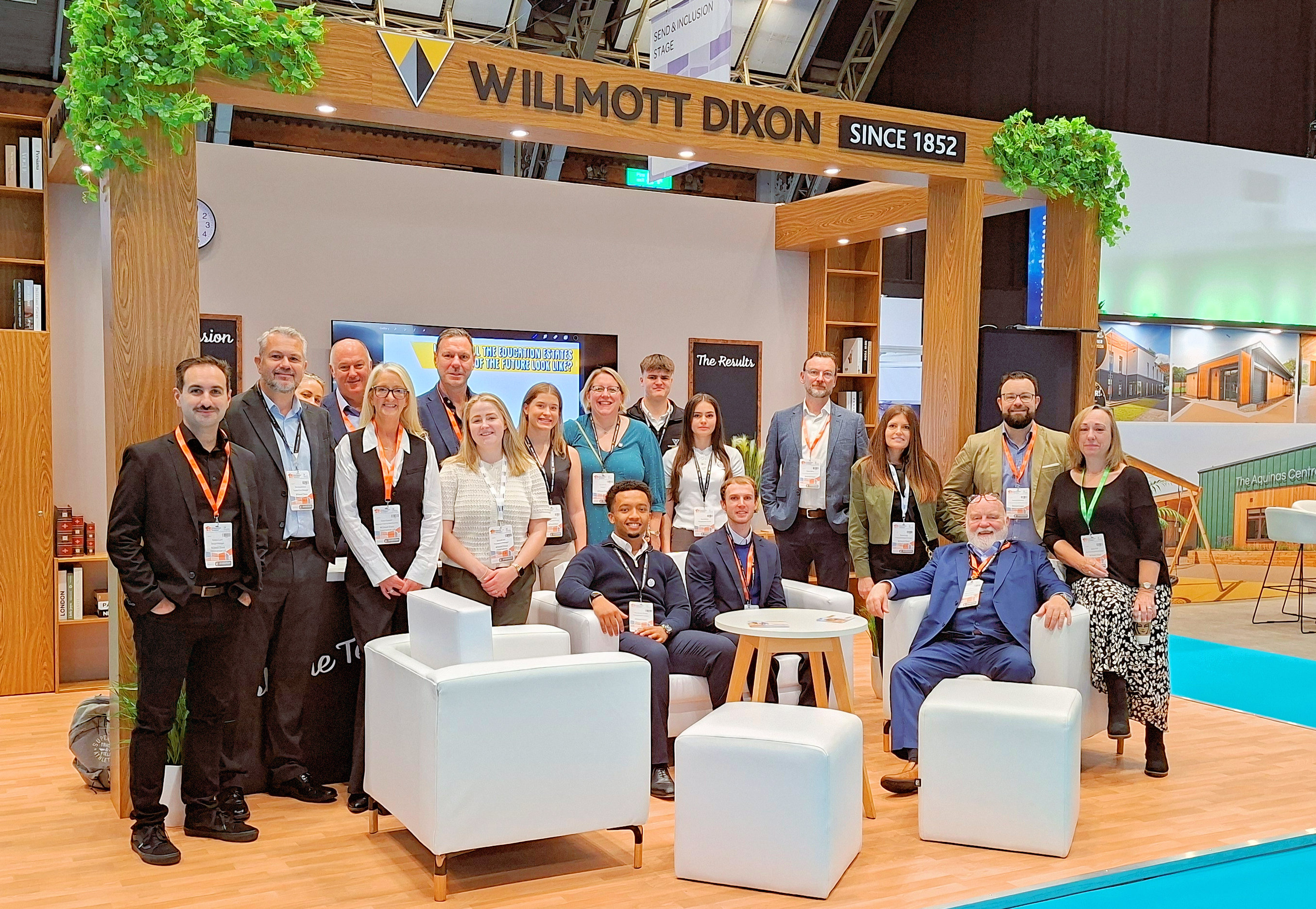
Team WD at the 2026 Education Estates conference
Standardise the routine to make time for what is specific
We must not trade engagement for pace. It is to stop spending design time on things that should already be solved.
On our stand we demonstrated our Standardised Education Platform Designs: pre-designed classrooms and learning spaces that help schools get to site faster because the repeatable elements are already worked through. The point is not that every school should look the same. Rather, a standard classroom frees the team to spend pre-construction time on what is genuinely particular to that school and its pupils.
It was telling that the audience in our session asked how learning from Sleaford, the 28-bed secure children's home we are building for Lincolnshire County Council, had shaped the schemes that followed. That is how specialist knowledge should work: learned once, then carried forward.
What an award-winning SEND school shows
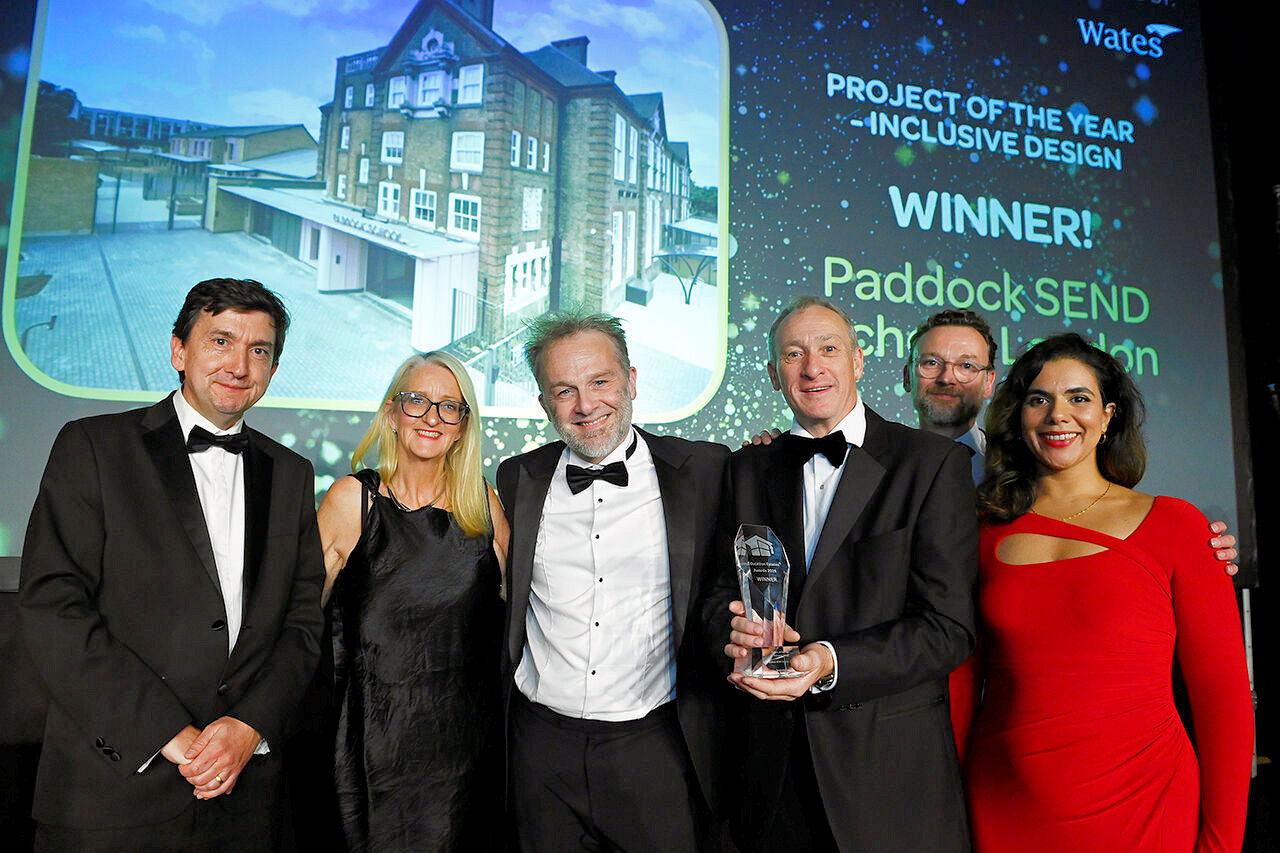
Paddock School in Tooting, which won Project of the Year – Inclusive Design at the awards (below), makes the case better than I can. Delivered for Wandsworth Borough Council through the SCAPE framework, with Arcadis as architect, it brings a converted Victorian building and new build together to create 64 more places for pupils with complex needs, close to home. The new building achieved BREEAM Outstanding.
Inclusion of that quality needs early, careful engagement. It does not need a longer programme, provided the rest of the building is not reinvented from scratch.
Estate decisions now sit with boards
The second big shift is from reactive repair to planned maintenance. Through its new Manage Your Education Estate service, the DfE is putting responsibility for condition data with trusts and other responsible bodies.
That changes who makes the investment call, and on what evidence. Most of the estate that will serve pupils in ten years' time already exists. Good condition data means renewal and retrofit can be planned before failure rather than funded after it, and Paddock shows that an existing building can reach a standard any new one would be proud of.
Learning across sectors, in both directions
Technology ran through almost every session. Digital infrastructure can no longer be treated as an add-on; it is part of what makes a learning space adaptable to whatever teaching looks like next.
There was also real appetite to learn from other public sectors. At Healthcare Estates a week earlier, the NHS was wrestling with the risk of a 'two-tier estate': new hospitals alongside an ageing, backlogged one. Education faces the same split. Health has moved towards standardised, repeatable design through Hospital 2.0, and policing has done the same with custody. Education builds at a volume that should let it go further than either.
What visitors asked for
We also asked visitors to our stand a simple question, captured live by artist Jenny Leonard (below): what will the education estates of the future look like? Every idea counted towards a donation to the National Autistic Society.
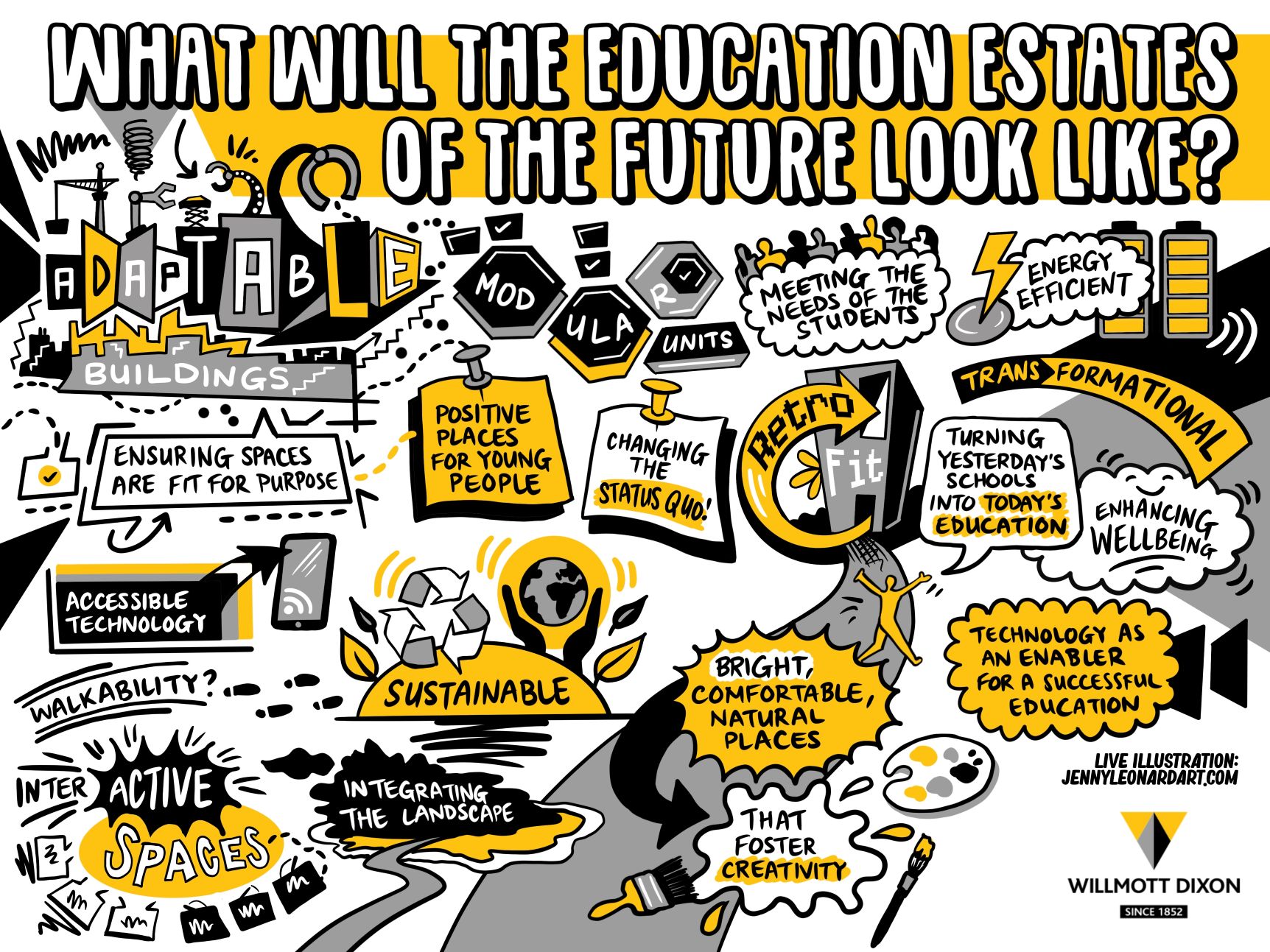
The answers echoed the conference: buildings that are fit for purpose, energy efficient and adaptable; strong support for renewal and retrofit; bright, comfortable spaces that support wellbeing and achievement. What people described was not a faster building but a better one.
Education Estates 2026 confirmed that the challenge is no longer working out what the estate needs. It is converting ambition into buildings that can be delivered. Speed will get the money spent. Designing around the people who use those buildings is what will make it worth spending.